

There’s a war happening right now…. Not with bullets or bombs, but with ideas, narratives, and carefully crafted messages that flow through our news feeds, textbooks, and political discourse like water through a dam that’s been deliberately opened. And it costs about $1.2 billion a year.
That’s right. Over a billion dollars annually is spent by a combination of government agencies, billionaire donors, and private institutions to shape how we think about communism, socialism, and alternative economic systems. It’s a staggering figure — enough to fund thousands of schools, hospitals, or infrastructure projects. Instead, it’s being deployed in what might be the longest-running information campaign in modern history.
But here’s what makes this particularly fascinating, and more than a little unsettling: most people have no idea it’s happening.
The Machine That Runs on Money
Let me paint you a picture with actual numbers. Every single day, the Voice of America broadcasts in 49 languages across the globe. It reaches millions of people in countries where press freedom is limited, where authoritarian governments — often communist or formerly communist — control the narrative. And it does this with an annual budget of approximately $267.5 million of taxpayer money, funded through the U.S. Agency for Global Media.
That’s just one organization.
Then there’s the National Endowment for Democracy, which received $315 million in fiscal year 2023 alone. The NED doesn’t broadcast news — it’s more surgical than that. It funds grassroots movements, democracy activists, civil society organizations, and media outlets in countries across the world. Its stated mission? Promoting democratic institutions. Its practical effect? Countering communist and socialist influence wherever it takes root.
The organization was literally established in 1983 during the Reagan administration as a soft-power tool to promote American interests abroad. Unlike the CIA’s covert operations of the Cold War era, NED operates openly — but with the same fundamental objective: shaping foreign political landscapes to favor capitalist democracy over socialist alternatives.
USAID, the U.S. Agency for International Development, throws another estimated $200 million annually into programs specifically designed to counter communist ideology. They do this through economic development projects, support for democratic institutions, and strategic aid that comes with ideological strings attached. During the Cold War, this was explicit and unapologetic. Today, it’s more subtle, woven into development rhetoric and humanitarian language, but the underlying goal remains remarkably consistent.
Add those three up and you’re already at roughly $780 million per year — and that’s just the government side of the equation.
Enter the Billionaires
Now let’s talk about private money, because this is where things get really interesting.
George Soros, through his Open Society Foundations, has invested billions in promoting democracy and human rights, often in regions with communist or authoritarian governments. While not exclusively anti-communist (Soros would likely bristle at that characterization), his funding systematically supports initiatives that oppose communist governments and ideologies. He’s funded dissidents in China, democracy movements in Eastern Europe after the fall of the Soviet Union, and civil society organizations in Latin America that push back against socialist governments. The annual expenditure on these initiatives is difficult to pin down exactly, but estimates suggest it’s in the hundreds of millions.
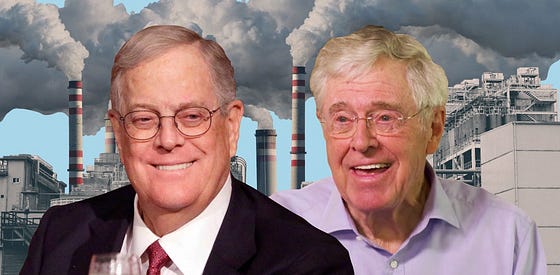
Then there’s the Koch network. The Koch brothers have invested heavily in promoting free-market capitalism and opposing socialist policies. They’ve funded everything from university economics departments to political campaigns to media outlets that champion their particular brand of libertarian capitalism. The exact figure shifts year to year, but their anti-socialist spending easily reaches into the hundreds of millions annually. Their network includes organizations like Americans for Prosperity, the Cato Institute, and countless other advocacy groups that produce a constant stream of content warning against the dangers of government intervention and collective ownership.
The Walton family has supported initiatives that advocate for limited government and free-market policies through various foundations and political contributions.
Other billionaires follow similar patterns, their wealth flowing into a vast network of think tanks like the Heritage Foundation, the American Enterprise Institute, and the Hoover Institution, all of which produce a steady stream of research, policy papers, and media content that frames capitalism as the only viable economic system and communism as an inherent evil.
The University of Austin, a new institution backed by billionaires including Jeff Yass, Harlan Crow, and Len Blavatnik, has already attracted around $200 million in investment. Its founders explicitly created it as a counterweight to what they see as the domination of left-wing ideology in higher education. It’s anti-communist by design, built from the ground up to promote Western values and capitalist principles.
The Architecture of Influence
What does this money actually buy?
It buys professors who teach economic theories that emphasize market efficiency and downplay capitalism’s failures.
It buys news outlets that frame labor movements as dangerous or naive.
It buys research that gets cited in congressional hearings and Supreme Court decisions.
It buys politicians who genuinely believe — or at least consistently vote as if they believe — that any expansion of the social safety net is the first step down a slippery slope to Soviet-style authoritarianism.
It buys narratives.
And here’s the thing about narratives: when they’re repeated often enough, through enough channels, by enough authoritative voices, they stop feeling like narratives at all. They just become “common sense.” They become “the way things are.” They become so thoroughly embedded in our collective consciousness that questioning them feels radical, dangerous, or simply stupid.
Consider how we talk about universal healthcare in the United States.
Despite it being standard practice in virtually every other developed nation, it’s still frequently labeled as “socialist” or even “communist” in American political discourse — a framing that immediately triggers decades of anti-communist conditioning. That’s not an accident. That’s the result of sustained, well-funded messaging that has successfully linked social democratic policies with totalitarian communist regimes.
The Elephant in the Room: China’s Unprecedented Success
And here’s where the billion-dollar propaganda machine faces its biggest challenge: reality itself.
Because while American billionaires and institutions spend over a billion dollars annually telling the world that communist economic systems inevitably lead to poverty, oppression, and failure, China has been writing a very different story.
Let’s talk numbers, because they’re staggering.
In 1980, China’s GDP was roughly $191 billion. By 2023, it had grown to over $17.9 trillion — making it the second-largest economy in the world. That’s not just growth. That’s a transformation unprecedented in human history. No country has ever lifted so many people out of poverty so quickly.
Between 1981 and 2020, China lifted approximately 800 million people out of extreme poverty. Eight. Hundred. Million. People. To put that in perspective, that’s more than double the entire population of the United States. The World Bank has acknowledged this as “the fastest sustained expansion by a major economy in history.”
China has become the world’s largest manufacturer, producing roughly 28% of global manufacturing output. It’s the world’s largest exporter of goods. It’s building infrastructure — high-speed rail, renewable energy, telecommunications networks — at a pace that makes Western countries look like they’re standing still.
The country has built over 45,000 kilometers of high-speed rail since 2008 — more than the rest of the world combined. These aren’t just statistics; they represent real improvements in people’s lives, real economic development, real technological advancement.
And it’s doing this under a government that explicitly identifies as communist.
Now, you can argue — and many do — that China isn’t “really” communist anymore, that it’s adopted market mechanisms, that it’s actually state capitalism. And there’s truth to those arguments. But here’s the thing: China’s success fundamentally undermines the narrative that the anti-communist propaganda machine has spent billions promoting. The narrative that says centralized planning always fails, that collective ownership is always inefficient, that only Western-style free-market capitalism can produce prosperity.
China’s success is an existential threat to that narrative.
Why This Matters More Than Ever
This is why the propaganda spending has intensified in recent years. As China’s Belt and Road Initiative expands its influence across Asia, Africa, and Latin America — investing over $1 trillion in infrastructure projects across more than 150 countries — the U.S. and its billionaire class have ramped up their counter-messaging.
The framing has shifted from “communism doesn’t work” to “sure, China’s economy is growing, but at what cost to human rights and freedom?” It’s a more sophisticated argument, and one that contains legitimate concerns. But it’s also convenient that this shift in messaging coincides perfectly with China’s economic success making the old arguments untenable.
When the Soviet Union collapsed in 1991, Western capitalists declared victory. Francis Fukuyama literally wrote a book called “The End of History,” arguing that Western liberal democracy had won, that no other system could possibly compete. The assumption was that China would either collapse like the Soviet Union or gradually liberalize until it became essentially another Western-style democracy with Chinese characteristics.
Neither happened.
Instead, China developed its own model — one that combines elements of market economics with state planning, that allows private enterprise while maintaining Communist Party control, that has delivered prosperity to hundreds of millions while maintaining political authoritarianism. It’s not a model I’m necessarily endorsing, but it’s one that clearly works by many economic measures.
And that’s terrifying to the people spending $1.2 billion a year on anti-communist propaganda, because it suggests that maybe, just maybe, there are alternatives to Western capitalism. Maybe the narrative they’ve spent decades and billions of dollars promoting isn’t the whole truth.
The Hidden Costs
Now, I want to be clear about something: not all of this funding is nefarious or based on lies. Some of it supports genuinely important work — documenting human rights abuses in authoritarian countries, supporting independent journalism in places where press freedom doesn’t exist, helping activists organize against genuinely oppressive governments.
The problem isn’t that communist governments have been wonderful — they often haven’t been. China’s treatment of Uyghurs in Xinjiang is horrific. Its surveillance state is dystopian. Its suppression of dissent is real and brutal. These criticisms are valid and important.
The problem is the systematic, heavily funded effort to conflate all forms of socialism, all critiques of capitalism, all attempts at collective ownership or economic democracy with the worst excesses of Stalin’s Soviet Union or Mao’s Cultural Revolution. That conflation isn’t accidental. It’s expensive. And it’s effective.
When you spend $1.2 billion a year telling people that any alternative to market capitalism is inherently totalitarian, eventually people start to believe it.
Even when they’re watching capitalism produce massive wealth inequality, environmental destruction, and democratic backsliding, they can’t imagine alternatives because those alternatives have been systematically delegitimized.
The Irony Nobody Talks About
Here’s a delicious irony: the same people and institutions spending billions to promote “freedom” and “democracy” are often the ones most resistant to actual democratic control of the economy. They love political democracy — one person, one vote — but recoil in horror at economic democracy, where workers might have a say in how their workplaces are run or how profits are distributed.
They’ll spend hundreds of millions promoting “free markets” while simultaneously lobbying for subsidies, tax breaks, and regulatory capture that tilts those markets heavily in favor of existing wealth. They’ll fund think tanks that produce papers about the dangers of government intervention while their own companies depend on government contracts, intellectual property protections, and infrastructure investments.
The anti-communist propaganda machine isn’t really about promoting freedom or democracy in any meaningful sense. It’s about protecting a particular economic order that benefits the people funding the machine.
And that’s the point, isn’t it? Follow the money, and you always find the motive.
What Does $1.2 Billion Buy in the Marketplace of Ideas?
The combined expenditure — roughly $780 million from government sources and another $200–400 million from billionaires and private institutions — creates an overwhelming information environment. It funds:
Broadcasting networks that reach hundreds of millions of people globally with carefully crafted messages about the superiority of market capitalism and the failures of socialist systems. Voice of America alone reaches an estimated 354 million people weekly across all its platforms.
Think tanks that produce thousands of policy papers, op-eds, and reports each year, all promoting free-market solutions and warning against government intervention. The Heritage Foundation alone publishes hundreds of research papers annually, many of which explicitly frame socialism and communism as threats to American prosperity.
University programs and professorships that train the next generation of economists, political scientists, and policymakers in particular theoretical frameworks that treat capitalism as natural and inevitable. The Koch brothers have funded economics programs at over 300 universities.
Political campaigns and lobbying efforts that ensure elected officials remain hostile to socialist policies and supportive of corporate interests. During election cycles, Koch network organizations alone spend hundreds of millions on political advertising and mobilization.
Media outlets and content creators who frame news stories in ways that reinforce capitalist ideology and marginalize alternative perspectives. This includes everything from mainstream news networks to YouTube channels to social media influencers who promote entrepreneurship and free-market values.
Grassroots organizations that mobilize citizens around free-market principles, often in countries where socialist movements are gaining strength. Americans for Prosperity, a Koch-funded organization, has chapters in 36 states and mobilizes millions of activists.
It’s comprehensive.
It’s sophisticated.
And it’s largely invisible to the people it’s designed to influence.
The Global Competition of Narratives
Meanwhile, China isn’t sitting idle. It’s building its own narrative infrastructure, though with different methods and different goals. The Belt and Road Initiative isn’t just about infrastructure — it’s about influence.
China is investing in media outlets across Africa, Latin America, and Asia. It’s funding cultural exchanges, scholarships, and Confucius Institutes at universities worldwide.
But here’s the difference: China’s spending on international influence is often characterized as “propaganda” by Western media (funded by that $1.2 billion, notably), while equivalent American and billionaire-funded efforts are described as “promoting democracy” or “supporting free markets.” The framing itself reveals the bias.
China’s approach emphasizes economic development and mutual benefit rather than ideological conversion. It offers infrastructure investment without the political conditionality that often accompanies Western aid.
Countries in the Global South are increasingly receptive to this message, particularly when they can see the results: new ports, railways, power plants, and telecommunications networks that actually get built.
This is why the propaganda war has intensified.
As China demonstrates that its model can deliver tangible results, the narrative that capitalism is the only path to prosperity becomes harder to maintain.
Hi (again) from Canada. Not sure if you saw, but a short while back, our government wanted to make a “Victims of Communism” memorial. It got heavy pushback from Jewish and history groups—turns out, most of the names were Nazi-linked. So now we’ve got a blank, nameless slab in Ottawa.