
Are Bananas Going Extinct?
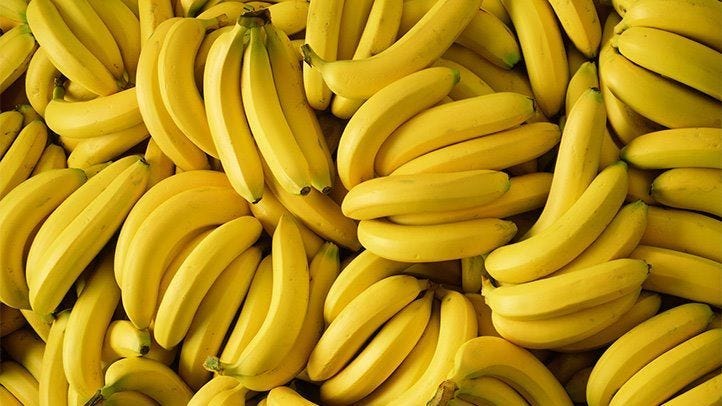
Bananas as we know them may go extinct once again due to a disease called Tropical Race 4 (TR4), which is currently threatening the supermarket variety of bananas known as Cavendish

TR4 attacks the vascular tissue of the banana plant, making it difficult for the plant to absorb nutrients and water from the soil.
This disease is related to Panama disease, which caused the banana plantations to collapse in the 1960s, prompting the industry to switch to a different cultivar.
Africa is a growing exporter of bananas, with about 15% of the market. However, many Africans depend on the fruit and get up to 90% of their calories from local banana varieties.
East African Highland Banana (EAHB) is particularly important to Africa, as it is a staple food for 80 million people. Uganda alone has about 120 varieties of this type of banana.

India is the leading producer of bananas and has hundreds of local varieties.
TR4 has already spread from Asia to Australia, where it has been slowly and steadily diffusing despite the precautions put in place by local growers. This has resulted in the Cavendish variety of bananas being under threat.
The Cavendish is a universal foodstuff, much like a Big Mac, because the plants have nearly no genetic diversity and are all clones of one another.
The Cavendish is a monoculture, meaning it is the only variety that most commercial growers plant each year. This lack of genetic diversity makes it vulnerable to diseases like TR4, which can infect all plants once it infects one plant.
Fifty years ago, the world was eating a different, better banana called Gros Michel, which tasted better, lasted longer, and did not require artificial ripening.
However, Gros Michel was commercially extinct by 1965 due to the Panama disease. The banana industry then switched to the Cavendish cultivar, which was deemed an inferior product but was immune to the disease, making it the preferred option.

Since the late 1980s, banana growers have realized the need for more diversity in banana varieties to prevent the problem from happening again, but it has not happened. TR4, which started in Malaysia around 1990, is caused by a common type of fungus called Fusarium and can be transported by wind, cars, and water, creating infections wherever it goes.
Everyone who has had athlete’s foot knows how hard it is to get rid of a fungus, making TR4 a significant threat to the banana industry worldwide.
https://edition.cnn.com/2015/07/22/africa/banana-panama-disease/index.html
Bananas and Imperialism
The history of bananas and imperialism can be traced back to the late 1800s when the United States began its imperialistic expansion into Latin America.
The banana industry played a significant role in this expansion, as the fruit became a lucrative commodity that could be grown and exported from countries such as Honduras, Guatemala, and Costa Rica. American companies such as the United Fruit Company (UFC) and Standard Fruit Company (SFC) took advantage of this opportunity and began to establish plantations in these countries, effectively dominating their economies.
The relationship between these American corporations and the countries in which they operated was exploitative in nature.

The UFC and SFC held significant political power in these countries, often manipulating local governments and their policies to ensure their profits. They also relied heavily on cheap labor, which was often provided by indigenous peoples who were forced to work on the plantations under poor working conditions.
This exploitation eventually led to a series of uprisings and revolts in Latin America during the early 1900s. These movements, which were often led by labor unions and communist parties, sought to challenge the power of the American corporations and demand fair treatment for workers.
However, these uprisings were often met with violent suppression from both the American corporations and local governments, leading to widespread human rights abuses and political instability.
Today, the banana industry remains a significant part of the economies of many Latin American countries.
While there have been some improvements in working conditions and labor rights, the legacy of imperialism and exploitation continues to impact these countries.
The history of bananas and imperialism serves as a reminder of the ways in which powerful countries and corporations can exploit and manipulate less powerful nations for their own gain.
Bananas are nothing but trouble…
John Waters | Legendary Filmmaker
Eric Draitser | The Truth About the Ukraine War | #132 HR Podcast
Prof. Raymond Craib | The Truth About Anarcho-Capitalism | #130 HR Podcast
Vijay Prashad | Author & Historian | US Imperialism | #66 Homeless Romantic Podcast
Prof. Brian Toon | How to Survive Nuclear War | Prof. of Atmospheric and Oceanic Sciences | #71 HR
https://linktr.ee/ChrisJeffries The Homeless Romantic Podcast https://chris-jeffries.com/ https://www.patreon.com/thehomelessromantic